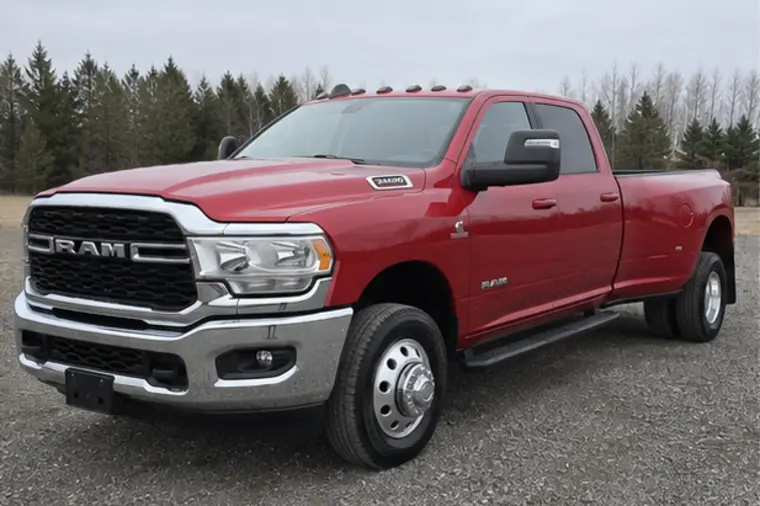
Farm-truck work is rarely captured by one trailer weight. The same pickup may move between short yard trips, highway towing and loaded field access, with long seasonal gaps between those duties.
Build the buying decision
Define mixed duty
Yard trips + road loads + seasonal use
Inspect storage history
Dates + fuel records + starting condition
Check support
Local shop + parts + peak-season backup
Separate road loads from yard convenience
List the heaviest recurring road-going combination and the materials carried in the truck. Count people, hitch equipment, tools, auxiliary tanks and trailer pin or tongue load. Use the loaded condition, not a trailer's empty appearance, for the capacity review.
Evaluate ground clearance, turning room and traction needs independently from weight ratings. Four-wheel drive can be relevant to access but does not create extra allowable payload. A truck that is convenient in a yard still needs an appropriate verified configuration for its road work.
Read the seasonal operating history
Ask how the truck was stored, fuelled and serviced during low-use periods. Look for records that include dates as well as kilometres. Have a technician assess starting, batteries, fluids, brakes and evidence of contamination or animal damage after extended storage.
Explain the expected short-trip and idle pattern to the inspecting shop. For trucks with aftertreatment, use the exact owner's operating guidance when assessing whether the routine fits the system. Do not treat a generic highway-drive suggestion as a cure for an unresolved warning.
Buy for local repair access
Identify who can service the exact engine and any installed body or equipment in your area. Compare turnaround, transport distance and substitute availability during the busiest season. A familiar older engine is not automatically economical if chassis parts or prior modifications delay repair.
Check current registration, insurance and any farm-use provisions with the responsible authorities for the operation. This page does not assume a farm exemption or a universal licence threshold. Keep the purchasing file focused on the actual truck, loaded job and documented requirements.
Evidence note: manufacturer documents establish the specific facts and applications cited. Buying workflows and cost scenarios are DieselTrucks.ca editorial guidance. These pages do not publish measured failure rates or confirm the condition, recall status or capacity of a particular truck.
General educational content for Canadian diesel-pickup research. Verify the exact truck, model year, certification labels, owner manual and manufacturer documentation, and obtain qualified mechanical or towing advice where appropriate.
Sources & Further Verification
Use the exact model year, VIN, truck labels and current manufacturer documentation when moving from general research to a purchase or towing decision.