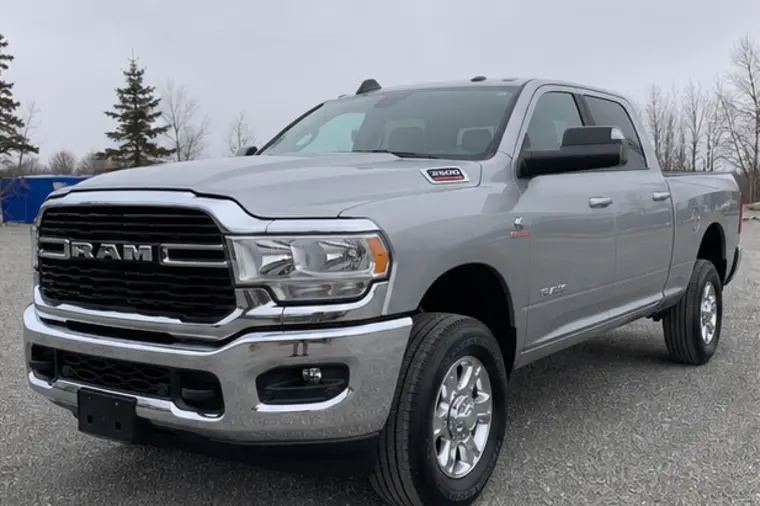
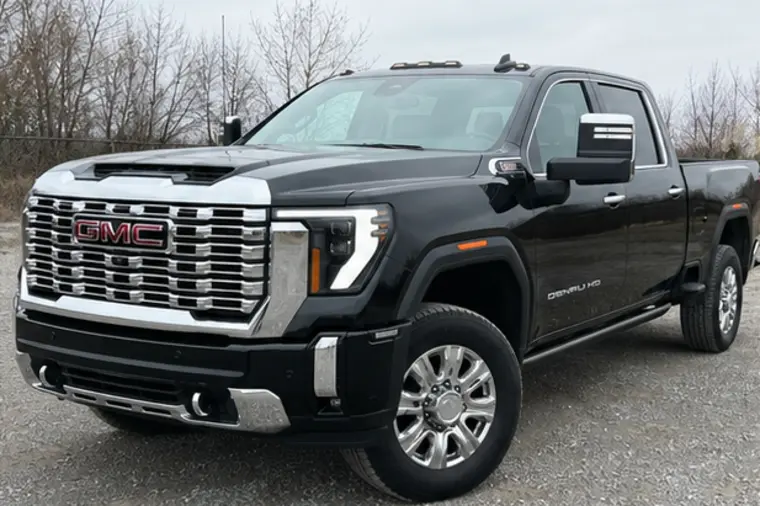
The RAM 2500 and GMC Sierra 2500HD can both suit an HD diesel brief, but their cab choices, equipment and powertrain timelines need a direct comparison. Start with the actual truck configuration and the load it must handle. A Cummins or Duramax badge alone does not establish the better purchase.
Compare the current applications, then the actual candidates
The table describes manufacturer specification context. It does not report a comparative road test, measured fuel use or expected lifetime repair rate.
| Factor | RAM 2500 Cummins | Sierra 2500HD Duramax |
|---|---|---|
| Current cited engine/output | Revised 6.7L, 430 hp/1,075 lb-ft | Later 6.6L HD, 470 hp/975 lb-ft |
| Transmission context | Eight-speed with the revised 2025-onward system | Ten-speed in current GMC HD material |
| Cab decision | Evaluate Mega Cab and other applicable configurations against the job | Crew, Double and Regular Cab choices vary with trim and bed |
| Daily-use evidence | Try the actual cab, controls and storage | Try the actual cab, controls and storage |
| Capability evidence | RAM diesel label and correct guide row | Sierra 2500HD label and correct guide row |
| Used-buying focus | Exact year/transmission, campaigns and history | Exact engine generation/transmission, campaigns and history |
Cab and equipment: compare more than trim prestige
GMC's 2026 Pro/SLE/SLT page specifies Sierra 2500HD Crew Cab with a 6-foot-9-inch standard or 8-foot long bed. Double Cab on Pro/SLE has those bed choices; Regular Cab on Pro/SLE has the long bed. These combinations help narrow a work-truck or passenger-carrying shortlist before shopping by trim name.
RAM's cited Canadian lineup includes Mega Cab diesel configurations. Compare the storage and seating arrangement you need, but also verify the bed and overall configuration that comes with that choice. A larger-feeling cabin is useful only if the truck still fits the rest of the job.
Try entry, seating, visibility, control reach and normal cargo placement. For work use, check access with the equipment you carry. For family use, test the seating arrangement that will actually be occupied. Neither “luxury” nor “work truck” is a substitute for checking the particular vehicle.
The powertrain timeline matters when prices differ by year
The revised 2025-onward RAM engine and eight-speed pairing should be treated separately from earlier 6.7L combinations. If the RAM candidate is older, identify the actual transmission and use matching service information. Do not use a current advertisement to describe its output or maintenance requirements.
On the GMC side, distinguish the HD 6.6L from the Sierra 1500 3.0L, then identify the HD engine generation and transmission. GM's later L5P specification differs from the 2023-and-older output context described in its technical material. The engine name alone is not a complete year-specific specification.
If one truck is newer, lower in kilometres or substantially differently equipped, acknowledge that the price comparison is between two purchase propositions. It is not a controlled test proving the better engine brand.
Payload and towing decide whether either truck belongs on the list
Calculate the operating load using the actual payload label: occupants, cargo, permanent additions, hitch hardware and loaded tongue or pin weight. Then check axle, tire and hitch limits, GVWR, GCWR and the correct configuration's trailer rating.
RAM's published gas and diesel payload maxima are separate, so do not assign a gas headline to a Cummins candidate. GMC HD advertising can include configurations beyond the Sierra 2500HD in your quote. Use an exact rating for each vehicle rather than two unrelated maxima.
If carried load eliminates both trucks, compare RAM 3500 and Sierra 3500HD configurations. A one-ton SRW or DRW candidate must still pass the checks, but it is a more relevant next step than trying to use engine torque to solve a payload deficit.
Ride and driver assistance need an actual-vehicle check
RAM identifies link-coil rear suspension on the 2500. That specification does not establish a universal ride winner against the Sierra. Compare actual tires, load, suspension condition and any modifications before attributing a driving impression to the model alone.
Verify which cameras, mirrors and driver-assistance features are installed, and read the owner's manual limitations. Feature availability varies with equipment and should not be assumed from a model-family page. A useful camera system can aid a task without replacing the driver's responsibility or the truck's load limits.
For an older truck, inspect accessory wiring and any hitch or suspension changes. A neat installation still needs to be understood and checked for the particular vehicle and use.
Used condition and service access can settle a close decision
Request dated engine and transmission service records, major repair invoices and current manufacturer VIN checks. FCA's Y78 filing concerns specified older RAM diesel applications and is a reason to investigate those candidates precisely. It does not establish a universal Cummins disadvantage or certify that the GMC has no campaigns.
Have both trucks inspected for powertrain symptoms, underbody condition, steering, brakes, tires and hitch mounting. Separate diagnosed work from further investigation. A seller's assurance that a tune “fixed everything” is not the same as documented factory-equipment verification and a qualified condition assessment.
Ask local shops about the actual combinations and their current scheduling. For a working truck, suitable backup capacity matters: a replacement vehicle that cannot carry your crew or tow the trailer does not fully solve downtime.
Which truck makes the stronger purchase?
Choose the RAM when its particular cab, configuration, condition and total cost better fit your assignment. Choose the Sierra when its equipment, driver fit, evidence and ownership proposition are stronger. Use written quotes, consistent fuel assumptions and an allowance for identified immediate work.
Does the GMC's horsepower advantage settle towing? No; actual ratings and loaded limits do. Does RAM's torque figure settle reliability? No; output and condition are different evidence. Should a premium Sierra trim be compared with a basic RAM solely on price? Account for the equipment difference before drawing a conclusion about value.
Evidence note: manufacturer documents establish the specific facts and applications cited. Buying workflows and cost scenarios are DieselTrucks.ca editorial guidance. These pages do not publish measured failure rates or confirm the condition, recall status or capacity of a particular truck.
General educational content for Canadian diesel-pickup research. Verify the exact truck, model year, certification labels, owner manual and manufacturer documentation, and obtain qualified mechanical or towing advice where appropriate.
Sources & Further Verification
Use the exact model year, VIN, truck labels and current manufacturer documentation when moving from general research to a purchase or towing decision.
- Cummins January 2025 announcement — revised engine, eight-speed and separate pickup/chassis-cab outputs
- GMC Canada 2026 Sierra HD Pro/SLE/SLT — diesel powertrain
- RAM Canada 2026 2500 — 2500/3500 suspension distinctions
- GM L5P technical description — later specification versus 2023-and-older engines
- RAM Canada 2026 2500 capability — separate gas/diesel maxima and equipment conditions
- FCA Y78 / U.S. 21V-880 filing — specified 2019–2020 diesel population
- Cummins–RAM engine history
- Chevrolet Canada manuals and guides