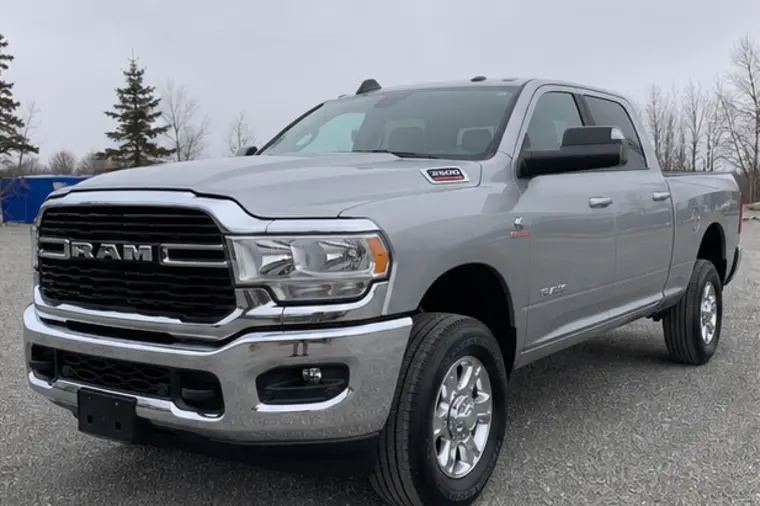
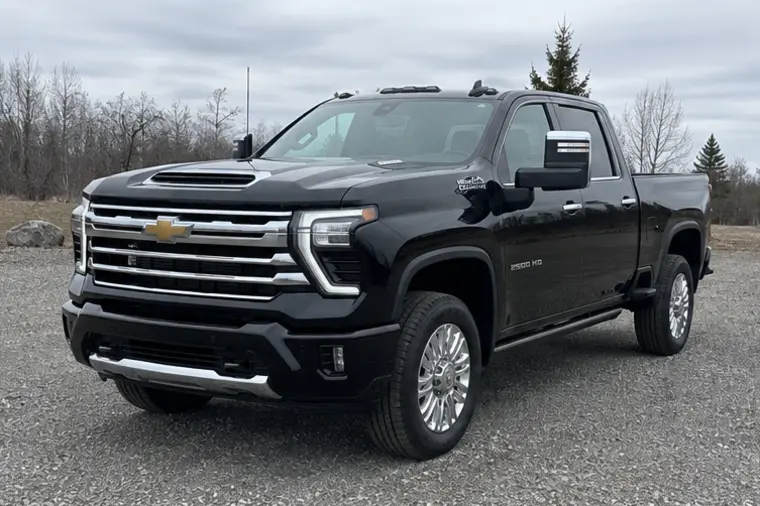
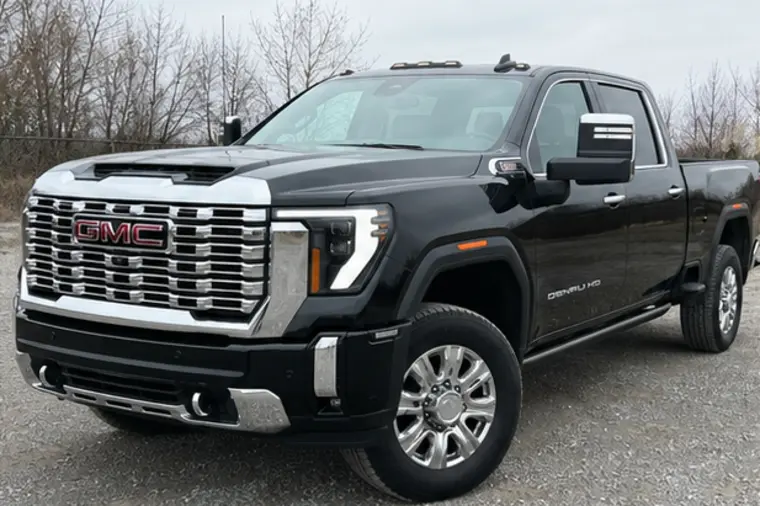
For an HD pickup purchase, Cummins versus Duramax usually means comparing a RAM 2500/3500 6.7L with a Chevrolet Silverado or GMC Sierra HD 6.6L. Start with matching truck classes and model years. The Duramax name also includes a separate 3.0L half-ton engine, so a comparison based only on the engine brand can mix unlike vehicles.
A current power snapshot compares applications, not engine badges in isolation
Cummins' 2025 pickup announcement lists the revised 6.7L system in RAM 2500 and 3500 pickups at 430 hp and 1,075 lb-ft with a new eight-speed transmission. It separately lists RAM chassis-cab output at 360 hp and 800 lb-ft. GM's current L5P technical page lists 470 hp and 975 lb-ft as tested in Silverado HD and Sierra HD. These are documented application snapshots, not a complete same-year test or a reason to transfer either rating to an older candidate.
The published numbers describe different torque and horsepower shapes, but they do not establish acceleration, grade speed, engine braking, fuel use or cooling performance for two unidentified trucks. Those outcomes also depend on transmission programming, axle ratio, tires, truck mass, configuration and load. Use the exact vehicle's literature and a representative drive before turning a peak number into a buying conclusion.
Architecture is another boundary rather than a winner. The Cummins pickup engine is an inline-six system; the L5P is a 6.6L V8. Layout can affect parts access and workshop procedure, but neither cylinder arrangement proves a lower repair rate, easier job or longer life without application-specific service evidence.
| Current source snapshot | Published output | Application boundary |
|---|---|---|
| 2025 Cummins 6.7L pickup system | 430 hp / 1,075 lb-ft | RAM 2500/3500 pickup; eight-speed |
| 2025 Cummins 6.7L chassis cab | 360 hp / 800 lb-ft | RAM 3500/4500/5500 chassis cab |
| Current GM L5P technical reference | 470 hp / 975 lb-ft | As tested in Silverado HD and Sierra HD |
| Used candidate | Verify its own year and calibration | Do not import the newest rating |
Serviceability claims need a local procedure and quote
Cummins says the revised system moves the oil filter and dual fuel filters to top-side service positions and adds top-feed dry-service injectors, a new fuel pump and glow plugs. GM lists direct high-pressure common-rail injection plus EGR, SCR, DPF and intake-throttle emissions controls for L5P. These facts help define which parts, procedures and technician experience belong in each service plan.
Manufacturer statements about improved serviceability or durability are not repair-time studies. Ask two local shops to quote the exact scheduled or diagnostic job on the identified truck, including access, fluids, filters, related parts and calibration steps. Keep dealer availability, independent-shop capability and downtime as separate fields rather than declaring a universal service winner.
For an older candidate, ignore current component placement until the installed generation is confirmed. A familiar engine-family name does not make a 2025 Cummins filter layout or a later L5P output specification applicable to an earlier truck.
Use a normalized buyer scorecard instead of a brand verdict
First reject any truck that cannot satisfy the loaded trailer, payload, axle, tire, hitch or combination limits with a suitable margin. Then compare the remaining candidates under the same annual distance, load, route, fuel-price, service and downtime assumptions. Record Canadian and U.S. units without silently converting one into the other.
Next score evidence quality: original build information, exact manuals, dated maintenance, campaign completion, itemized repair sequences, current scan and inspection. A well-documented older truck can be a stronger purchase than a newer candidate with an unresolved warning or uncertain modification. That conclusion applies to the vehicles compared, not every Cummins or Duramax.
Finally include cab fit, controls, visibility, bed and hitch geometry, dealer or independent support, parts lead time, insurance and a cash reserve. Declare a conditional winner only after these inputs are visible. If one critical identity, load or condition field remains unresolved, the honest result is to pause the purchase—not to let engine reputation fill the gap.
| Decision layer | Compare on both trucks | Hard stop |
|---|---|---|
| Configuration | Year, class, cab, bed, drive, axle and hitch | Unlike or unidentified applications |
| Capability | Loaded worksheet plus every binding rating | Insufficient payload, axle or hitch margin |
| Evidence | Service, campaigns, diagnosis and modifications | Material warning or identity remains unresolved |
| Ownership | Fuel scenario, quotes, support and downtime | Budget depends on an unsupported assumption |
Compare the right applications first
The cited outputs identify applications, not a towing winner. They are not wheel-dyno measurements and do not describe every older Cummins or Duramax pickup. Choose a truck class and year range before using the figures to compare candidates.
| Question | Cummins side | Duramax side |
|---|---|---|
| Main HD pickup application | RAM 2500/3500 6.7L | Silverado/Sierra 2500HD and 3500HD 6.6L |
| Current pickup context | Revised 2025-onward system; eight-speed pairing | Later L5P specification; ten-speed HD pairing |
| Published pickup output context | 430 hp, 1,075 lb-ft in the cited revised application | 470 hp, 975 lb-ft in the cited later HD application |
| Different application to keep separate | Chassis-cab output and completed-vehicle ratings | 3.0L half-ton Duramax and medium-duty applications |
| Used-buying identification | Year, engine revision and actual transmission | Engine code, truck generation and actual transmission |
The 2025 RAM change matters in a used-versus-new comparison
Cummins' January 2025 announcement describes a revised 6.7L engine system and an eight-speed transmission for the new RAM applications. Earlier 6.7L RAM trucks need their own year-specific powertrain identification. Treating all of them as the same engine-and-transmission proposition misses a significant buying boundary.
For a used RAM, ask for the build details and service documents that identify the actual transmission. Then review its maintenance and repair history with a technician familiar with that combination. A newer advertisement's output figure cannot establish what an older truck produces or how it should have been serviced.
On the GM side, L5P identifies an HD engine family with revisions over time. GM's later technical description explicitly compares the newer output specification with 2023-and-older L5P engines. Verify the actual model year and transmission pairing rather than assuming every L5P truck has the latest specification.
Which is better for towing?
Neither engine name settles the tow decision. Match RAM 2500 to the appropriate GM 2500HD candidates, then compare one-ton SRW or DRW configurations if carried load requires them. Use the actual payload label, loaded trailer weight, tongue or pin load, hitch equipment and the correct towing-guide row.
RAM Canada's current diesel capability information and GM's HD product material contain configuration-dependent figures. Do not compare a family maximum for one brand with an individual crew-cab rating for the other. Write down how each number was obtained so the comparison can be checked.
Peak torque may be relevant to how the powertrain is described, but it cannot override a rear axle, tire or hitch limit. The truck that passes the complete load assessment is the meaningful towing candidate even when another has the larger headline torque number.
Reliability requires engine-era and vehicle evidence
Cummins' long pickup history and Duramax's familiarity in GM HD trucks provide research context. Neither is a measured reliability ranking for two trucks in front of you. Look for dated service, diagnostic findings, repair scope, current campaign status and condition throughout the chassis.
For specified 2019–2020 RAM diesel applications, the FCA Y78 / U.S. 21V-880 filing is a reason to verify campaign applicability and fuel-system history. It is not a finding that every Cummins truck is unreliable. Similarly, do not infer that a GM candidate has no relevant campaigns because this comparison mentions a RAM filing; check both VINs through their manufacturers.
An older truck's modifications can complicate the evidence. Ask which hardware and calibration changed, whether the factory emissions equipment is present and what the inspecting shop can establish. A confident seller story should not replace the original repair and service documents.
Compare ownership costs with the same assumptions
Request local maintenance and repair quotes for the actual engine and transmission, not a generic “diesel service” price. Include tires, brakes, corrosion and other truck costs. The engine badge does not describe the condition of those parts or how soon they need work.
For fuel, compare the same distance, load and route assumptions. Unloaded highway figures from one owner's truck do not establish the cost of towing your trailer. Keep fuel savings separate from purchase premium, financing, scheduled maintenance and a contingency for uncertainty.
For work use, service access can decide an otherwise close comparison. Identify who can diagnose each powertrain, how appointments are handled and whether a substitute truck can perform the same job. That is a practical advantage specific to your location, not a universal claim about either manufacturer.
When to choose the RAM Cummins candidate
Choose it when its exact configuration passes the load checks, you prefer its cab and controls, and its price, history and service support make the stronger complete proposition. On a 2025-onward truck, evaluate the revised powertrain on its own evidence. On an older one, insist on identifying the actual transmission and repair history.
When to choose the GM Duramax candidate
Choose the Silverado or Sierra HD when its configuration and condition better fit the assignment and the ownership evidence supports the price. Compare the two GM brands at the truck level: trim equipment, visibility, ergonomics and the individual vehicle's history still matter even with a related HD powertrain.
Is Duramax the same engine in a 1500 and a 2500HD? No: the 3.0L half-ton and 6.6L HD applications are distinct. Is Cummins automatically better because of torque? No: output, certified capability and condition answer different questions. The useful winner is the candidate that meets your verified load and ownership requirements.
Evidence note: manufacturer documents establish the specific facts and applications cited. Buying workflows and cost scenarios are DieselTrucks.ca editorial guidance. These pages do not publish measured failure rates or confirm the condition, recall status or capacity of a particular truck.
General educational content for Canadian diesel-pickup research. Verify the exact truck, model year, certification labels, owner manual and manufacturer documentation, and obtain qualified mechanical or towing advice where appropriate.
Sources & Further Verification
Use the exact model year, VIN, truck labels and current manufacturer documentation when moving from general research to a purchase or towing decision.
- Cummins January 2025 announcement — revised engine, eight-speed and separate pickup/chassis-cab outputs
- GM L5P technical description — later specification versus 2023-and-older engines
- RAM Canada 2026 2500 capability — separate gas/diesel maxima and equipment conditions
- Chevrolet Canada 2026 Silverado HD — powertrains and configuration choices
- GMC Canada 2026 Sierra HD Pro/SLE/SLT — diesel powertrain
- FCA Y78 / U.S. 21V-880 filing — specified 2019–2020 diesel population
- Cummins–RAM engine history
- Chevrolet Canada manuals and guides