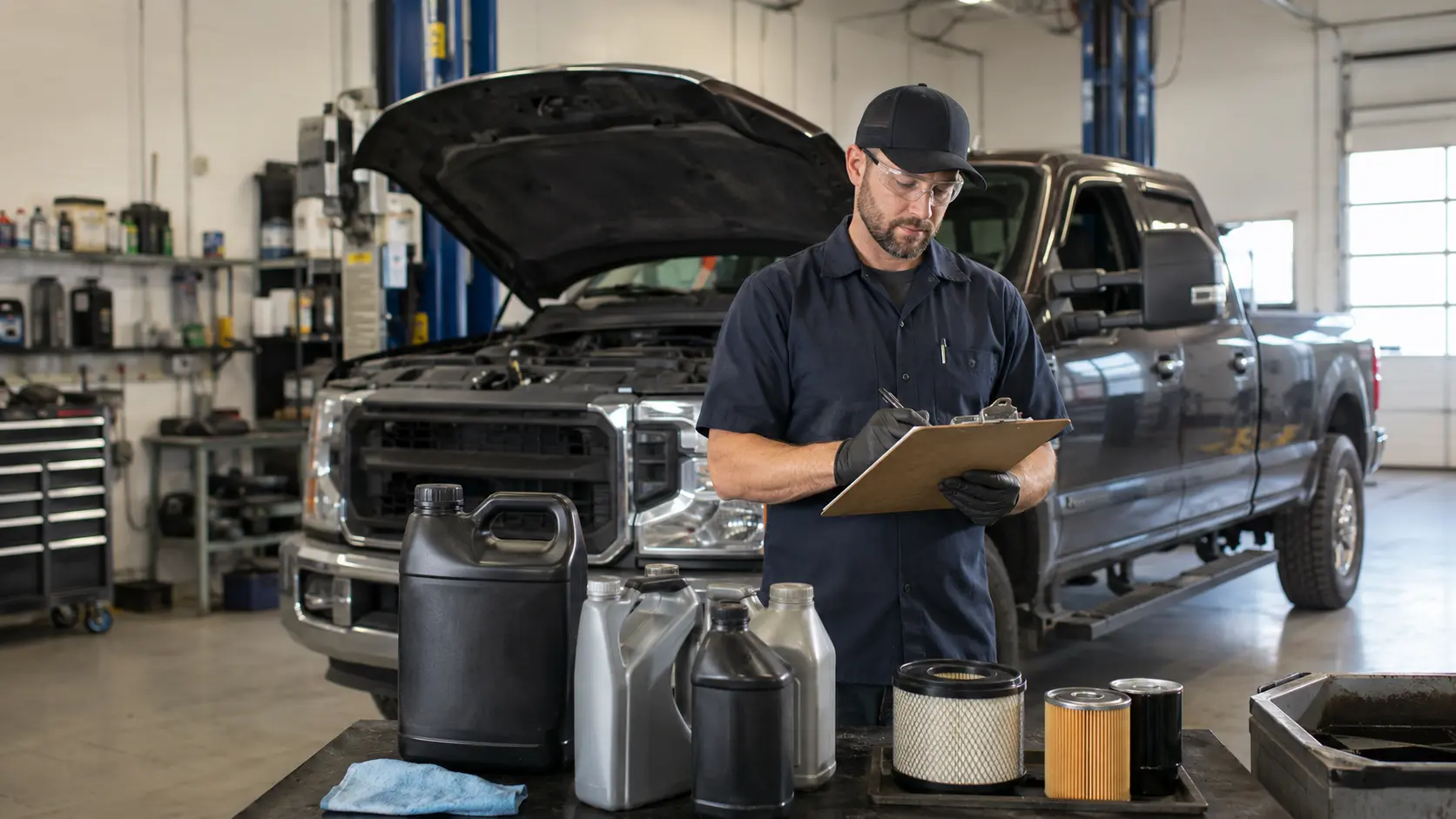
Oil analysis can add evidence to a purchase inspection. A single sample with unknown oil age cannot establish an engine's remaining life or rule out every mechanical problem.
Build the buying decision
Establish sample context
Oil age + top-ups + engine identity
Interpret with experts
Laboratory comments + technician findings
Choose follow-up
Trend + further diagnosis + purchase decision
Establish what was sampled
Record the engine identity, kilometres, oil-service date, distance or hours on the oil, lubricant specification and any top-ups. Ask who collected the sample and whether it came from the truck being considered. A laboratory number without sample context is difficult to interpret.
Fresh oil or substantial top-ups change the context of a result. That does not prove a seller is hiding damage; it means the report needs to be read with the maintenance history. Request previous results when available so the laboratory can discuss trends rather than an isolated number.
Let the laboratory and technician interpret it
Ask what the report actually measures, which results need follow-up and whether the sample quality limits interpretation. Do not compare raw values from different laboratories, oil intervals or engine families as though they form a common reliability score.
Combine laboratory advice with the technician's inspection. A concerning result may justify further diagnosis, but it does not automatically identify the failed component or cost of repair. A reassuring result does not replace cooling-system, starting, transmission or chassis assessment.
Use the report to decide the next step
Agree in advance who pays for analysis and any follow-up testing. Request results early enough that the purchase decision is not forced before interpretation is complete. Preserve the report and the sampling information together.
This is an editorial evidence workflow, not a table of laboratory rejection limits. Manufacturer owner documentation remains the source for the exact oil specification and service schedule. Use qualified laboratory guidance for analytical thresholds and the appropriate service procedure for diagnosis.
Evidence note: manufacturer documents establish the specific facts and applications cited. Buying workflows and cost scenarios are DieselTrucks.ca editorial guidance. These pages do not publish measured failure rates or confirm the condition, recall status or capacity of a particular truck.
General educational content for Canadian diesel-pickup research. Verify the exact truck, model year, certification labels, owner manual and manufacturer documentation, and obtain qualified mechanical or towing advice where appropriate.
Sources & Further Verification
Use the exact model year, VIN, truck labels and current manufacturer documentation when moving from general research to a purchase or towing decision.