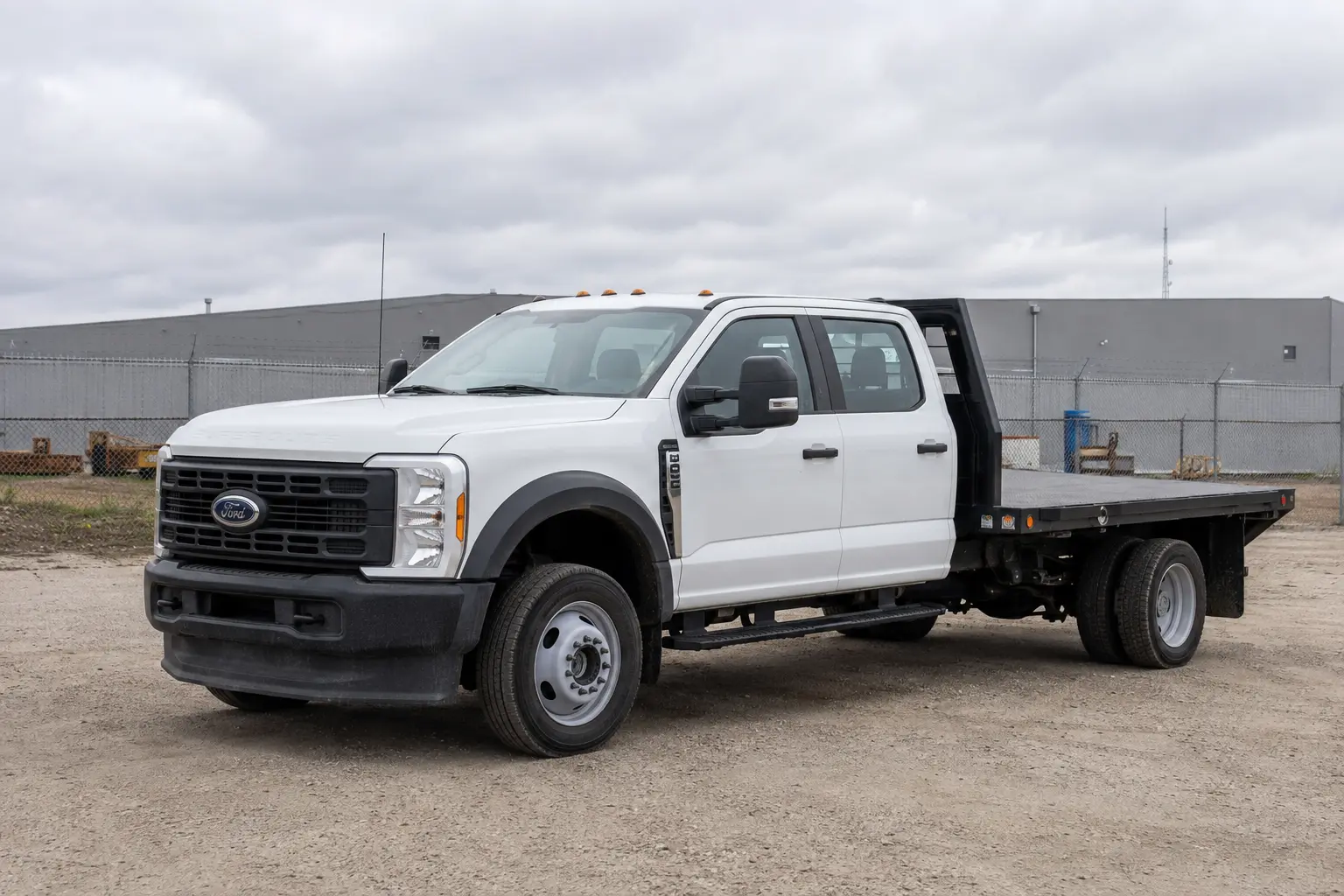
A flat deck solves an access problem. It does not automatically create more usable payload or a suitable trailer connection. Buy the completed installation for the material and equipment it must carry.
Build the buying decision
Map cargo
Footprint + loading method + mass
Verify hardware
Body mounts + anchors + hitch
Weigh loaded
Front axle + rear axle + total
Draw the load footprint
Record the length, width, weight and loading method of recurring cargo. Include pallets, attachment buckets, dunnage and handling equipment. Check whether a forklift can reach the load without damaging side boxes, lights or body edges.
A longer deck may help with bulky material but can encourage loading behind the rear axle. Ask the body supplier to review the proposed load distribution and mounting layout. Use loaded axle weights to confirm the finished arrangement rather than treating deck area as capacity.
Treat body, hitch and securement separately
Obtain body identification and installation documents. Have a qualified shop inspect deck support, frame attachments, corrosion, rear overhang and lighting. Ask for the intended ratings and installation evidence for tiedown anchors and any hitch; the presence of a steel loop is not proof of a rated anchor.
For gooseneck use, verify hitch structure, body opening, trailer clearance and the loaded connection geometry with the equipment manufacturers. Deck height and accessories can change clearance. A coupling demonstration should follow the hitch and trailer instructions, not an improvised test.
Compare completed trucks
Price the truck with usable storage, mud protection, appropriate mounting and any required repairs. An inexpensive bare flatbed may need substantial work before it matches a contractor's daily routine.
Photograph the unloaded body, retain an equipment inventory and get a representative loaded scale ticket. Those records make it easier to understand whether a later toolbox or auxiliary tank has changed the working load. If the work changes, repeat the calculation rather than relying on the original purchase assessment.
Evidence note: manufacturer documents establish the specific facts and applications cited. Buying workflows and cost scenarios are DieselTrucks.ca editorial guidance. These pages do not publish measured failure rates or confirm the condition, recall status or capacity of a particular truck.
General educational content for Canadian diesel-pickup research. Verify the exact truck, model year, certification labels, owner manual and manufacturer documentation, and obtain qualified mechanical or towing advice where appropriate.
Sources & Further Verification
Use the exact model year, VIN, truck labels and current manufacturer documentation when moving from general research to a purchase or towing decision.