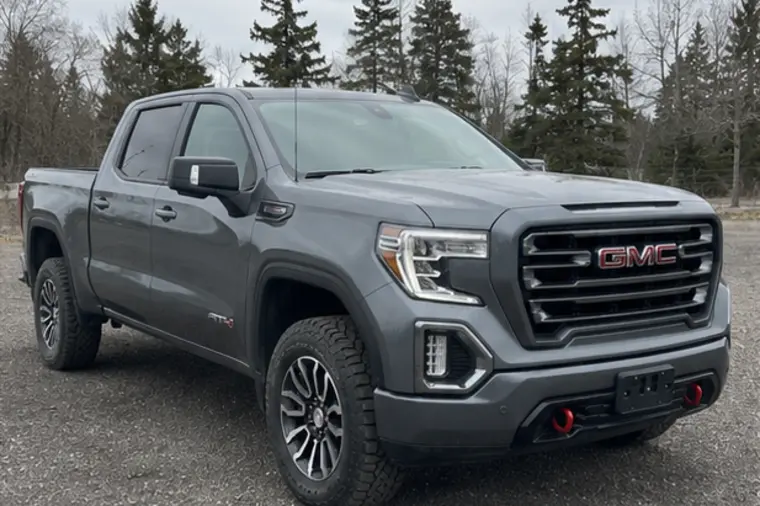
GMC Sierra 1500 diesel reliability depends on the exact LM2 or LZ0 application, its history and the work expected of it. Manufacturer service documents identify concerns worth checking, but they do not provide a fair Canadian failure-rate comparison across years. Assess the engine, transmission, emissions system and whole vehicle separately before deciding whether a candidate is dependable enough for your use.
Reliability is more than a list of complaints
A useful reliability assessment asks what could interrupt the job, how the individual truck has behaved and whether identified concerns are resolved. The number of bulletins found in a search does not answer those questions. Bulletins can document diagnostic improvements and narrowly defined conditions without saying how many owners experienced them. Older vehicles have also had more time to accumulate service history than a newly introduced application.
Separate frequency, severity and recovery. Frequency concerns how often a failure occurs in a comparable population; that denominator is not established here. Severity concerns the consequence if it happens. Recovery concerns diagnosis, parts, repair time and access to a suitable substitute. A truck can present an important inspection question without the available evidence proving a model-wide pattern of frequent breakdowns.
For a personal vehicle, an interruption may mean rescheduling a trip. For a contractor, it may mean a trailer cannot reach the job site. Define dependable enough in terms of your actual assignment. That makes the assessment useful even when the evidence cannot support a single numerical reliability score.
Identify the powertrain before interpreting a report
GM identifies the LZ0 as the later development of the LM2. The 2020 GMC guide pairs its 3.0L diesel with the 10L80, while the HD diesel uses the 10L1000. Treat the half-ton and heavy-duty transmission applications separately when reviewing a repair story or comparing invoices.
The 2023 Sierra 1500 LZ0 is specifically covered by GM bulletin 23-NA-071 for certain warning-code conditions and possible software involvement. This is year/application evidence, not permission to apply one update indiscriminately to every later truck. Ask a qualified shop to check the current service information for the VIN and the actual concern.
| Vehicle identification | Why it affects reliability research |
|---|---|
| LM2 versus LZ0 | Different engine application and relevant service history |
| 2022 Limited versus another 2022 configuration | Published bulletin scope may depend on the exact variant |
| Diesel versus gasoline | Engine and transmission complaints may be unrelated |
| Sierra 1500 versus Sierra HD | Similar branding does not establish shared components or loads |
Selected evidence to investigate
GM's wiring bulletin identifies an LM2-specific diagnostic branch, with 2022 Sierra Limited restrictions in its application table. Keep that branch separate from the document's gasoline-engine material. The buyer's practical task is to obtain a diagnosis that matches the truck, rather than choosing the most alarming symptom from a document covering several engines.
The DPF bulletin distinguishes different fault indications. An emissions warning deserves diagnosis; it does not automatically establish the same failed part on every vehicle. Do not use smoke, a code or a seller's description alone to infer the scope of the repair. Current service information and tests should determine the cause.
| Evidence | What to ask about | What it cannot establish |
|---|---|---|
| GM 21-NA-149, defined LM2 applications | Relevant wiring diagnosis when symptoms or records point there | Every Sierra's wiring condition |
| GM 23-NA-071, 2023 LZ0 | Applicable calibration history and recurring warnings | That every warning is software |
| Transport Canada 2024637, defined diesel vehicles | VIN status, completed work and shift complaints | Remaining transmission life |
| GM 16-NA-380, scoped DPF-equipped diesels | Proper diagnosis of emissions-related symptoms | A universal DPF replacement schedule |
Transmission evidence deserves its own review
For the defined diesel population, Transport Canada 2024637 describes a control-valve wear concern with potentially serious consequences. Confirm the VIN's status and ask what was actually done. If the truck also has a history of harsh shifting or a continuing warning, obtain a separate explanation of the current symptom.
A completed software campaign should not be presented as a replacement transmission unless the invoice documents that additional work. Likewise, a replacement assembly does not explain why it was needed or whether related issues were addressed. Read the repair order as a sequence: complaint, diagnosis, performed work and result. Missing steps are questions to resolve before relying on the vehicle for a demanding assignment.
Avoid an aggressive road test intended to provoke a serious fault. Have a qualified professional choose an appropriate evaluation. If behaviour suggests a safety concern, stop the assessment and arrange diagnosis before further use. A successful short drive cannot certify a transmission's future life, but a repeatable unresolved symptom is relevant to the purchase decision now.
Maintenance history should explain the truck's use
Ask for dated invoices rather than a general claim that the vehicle was maintained. Look for a coherent mileage sequence, identification of the work performed and records appropriate to the engine. Distinguish routine servicing from repairs after a warning or breakdown. A recent oil change is useful information, but it does not close questions about earlier gaps or unrelated systems.
Discuss the previous operating pattern: longer trips, short journeys, towing, extended idle time, seasonal storage and winter use. Do not convert those answers into an invented failure probability. Use them to identify what the inspector and servicing shop should review against the applicable maintenance documentation. The same odometer reading can represent substantially different work histories.
If records are missing, state what remains unknown. An independent inspection can reduce some uncertainty but cannot recreate every past service event. The decision is whether the remaining uncertainty is acceptable for your budget, timing and use. It should not be concealed by assigning the truck an unsupported lifespan estimate.
A practical inspection for dependable use
Start with vehicle identity and a record review, then arrange a cold start and a scan by a qualified technician. Ask for the meaning of active and historical faults, any evidence of recent clearing and the limitations of the available data. Record the conditions under which symptoms occur so that a subsequent recheck can address the same issue.
During an appropriate road evaluation, observe normal acceleration, shifts, braking, steering and operating messages. Include a check of trailer connections and relevant equipment if towing is central to the purchase. The seller's willingness to demonstrate a camera or hitch feature does not substitute for checking its condition and suitability for your own trailer.
Inspect tires, brakes, visible corrosion, leaks, bed and hitch condition, electrical modifications and signs of damage. These can interrupt ownership even when the engine itself performs normally. Have the report separate urgent concerns, work due soon, optional improvements and items that could not be assessed. A clear limitation is more useful than an inspection report that implies every component was certified.
Turn findings into a repair and downtime decision
Ask whether a substitute vehicle can perform the same task, not merely carry the driver. The answer may depend on trailer connection, cargo space and loaded capacity. A local appointment with a known repair scope can create a very different disruption from an unresolved intermittent fault just before remote travel.
Budget from identified needs. Separate consumables and scheduled maintenance from diagnosed repairs and optional accessories. Do not use an internet average as a promise of what this vehicle will cost, or claim a remaining distance before failure. The most defensible reliability decision combines current evidence with a support plan that the owner can actually use.
| Finding | Next evidence | Ownership implication |
|---|---|---|
| Diagnosed repair with a clear scope | Written estimate, parts availability and completion plan | Budget and schedule can be assessed |
| Repeated complaint after repairs | Diagnostic history and a focused recheck | Do not assume the last invoice closed it |
| Missing service history | Applicable baseline review and condition inspection | Residual uncertainty remains explicit |
| Wrong load capacity for the job | Vehicle labels and actual loaded weights | A reliable engine cannot correct the mismatch |
Sierra 1500 reliability questions
Is the LZ0 proven more reliable than the LM2? The cited evidence establishes an engine update, not a matched failure-rate comparison.
Does a recall make every truck in that year unreliable? No. It requires an applicable VIN check and attention to the defined concern, followed by assessment of present condition.
Can one inspection guarantee years of trouble-free use? No. It can identify findings and limitations at the time of inspection and support a better informed decision.
What is the strongest reason to pause? A material recurring symptom without an adequate diagnosis, especially when the purchase depends on immediate dependable service.
Evidence note: manufacturer documents establish the specific facts and applications cited. Buying workflows and cost scenarios are DieselTrucks.ca editorial guidance. These pages do not publish measured failure rates or confirm the condition, recall status or capacity of a particular truck.
General educational content for Canadian diesel-pickup research. Verify the exact truck, model year, certification labels, owner manual and manufacturer documentation, and obtain qualified mechanical or towing advice where appropriate.
Sources & Further Verification
Use the exact model year, VIN, truck labels and current manufacturer documentation when moving from general research to a purchase or towing decision.
- GM LZ0 technical description — later 3.0L version and LM2 comparison
- GMC 2020 trailering guide — original manufacturer powertrain and configuration tables
- GM 23-NA-071, April 2023 — 2023 LZ0 engine software
- GM 21-NA-149, May 2022 — engine-specific wiring diagnosis
- GM 16-NA-380, September 2022 — DPF fault distinctions
- Transport Canada 2024637 — diesel transmission recall
- Chevrolet Canada manuals and guides