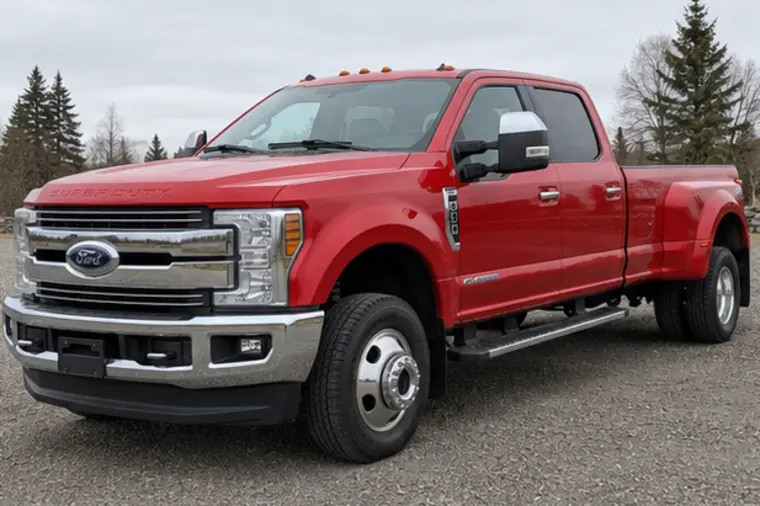
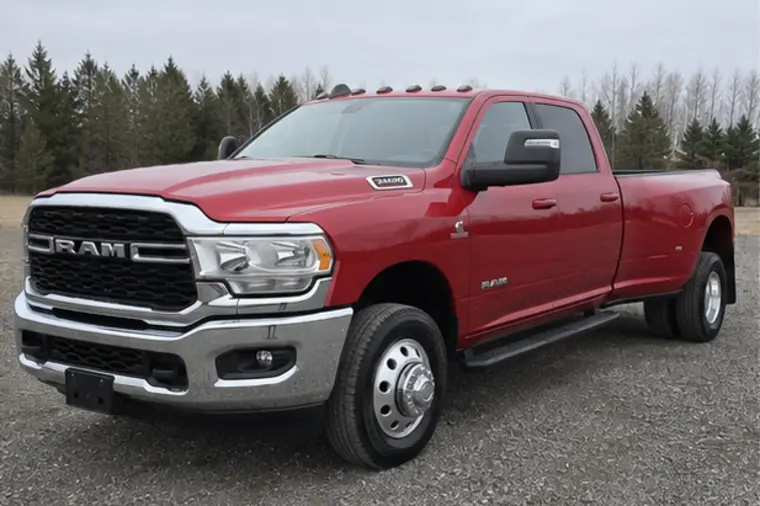
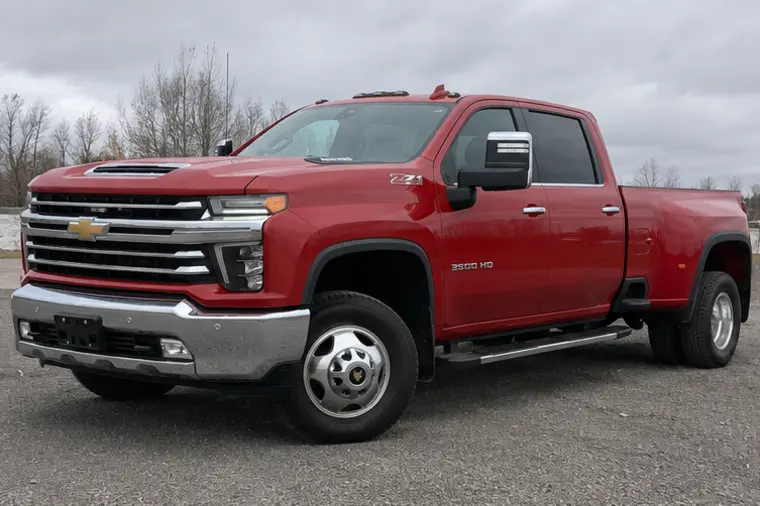
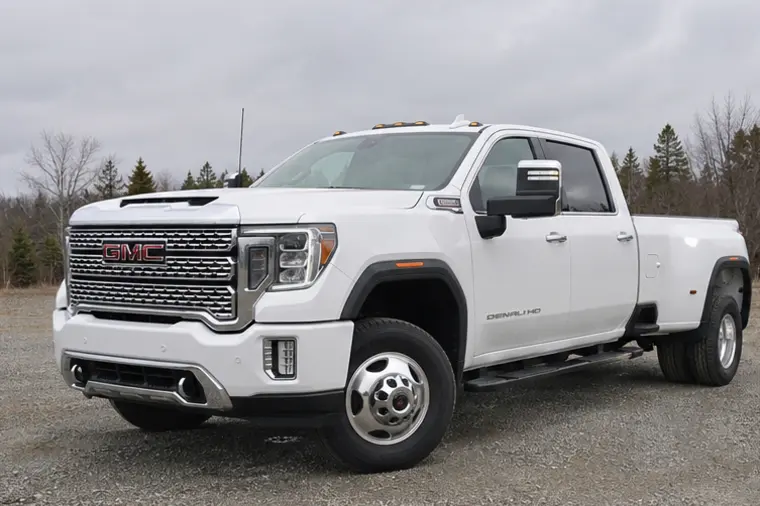
One-ton badges cover everything from SRW work pickups to wide DRW tow rigs. Begin with loaded pin weight, people and cargo before choosing a brand or engine.
Platforms and engine families
Compare the relevant Power Stroke, Cummins and Duramax generation together with its transmission, axle, cab, bed and factory towing equipment.
SRW or DRW first
The rear-wheel configuration can change width, tire count, payload and loaded-trailer suitability more than a trim-level comparison. Use the exact label and realistic load.
Payload, pin weight and axle limits
Add passengers, tools, bed cargo, hitch equipment and realistic loaded pin or tongue weight before comparing available payload. Then verify rear-axle, tire, hitch and combined limits for the exact truck.
Cab, bed and working dimensions
Compare passenger space, bed length, wheelbase, hitch clearance, overall width and turning needs. A higher-capacity truck that does not fit the property, job site or daily route may be the wrong configuration.
Support and used condition
Local service access, complete records, corrosion, modifications, hitch history and prior commercial or recreational use can decide between otherwise similar trucks.
Shortlist without a winner ranking
Keep each brand in contention until exact configuration and inspection evidence are compared. The useful result is a defensible shortlist, not an unsupported universal winner.
- Separate SRW and DRW comparisons.
- Confirm engine and transmission generation.
- Inspect towing and commercial-use evidence.
- Compare current documentation for the exact model year.
Set SRW or DRW requirements before choosing a brand
A one-ton shortlist can contain very different truck packages. Decide whether the job calls for an SRW or DRW configuration, identify pickup versus completed body, and hold the trailer and carried load constant. Then compare the actual candidates.
The best fit can be the truck with less unresolved work rather than the highest output claim. Price the ready-to-use configuration, including compatible hitch or body equipment and any diagnostic time still required.
| Evaluation | Ford F-350 | RAM 3500 | Silverado/Sierra 3500HD |
|---|---|---|---|
| Rear-wheel configuration | Record SRW/DRW and installed tires | Record SRW/DRW and installed tires | Record SRW/DRW and installed tires |
| Hitch and body | Verify installation and added mass | Verify installation and added mass | Verify installation and added mass |
| Repair readiness | Inspection and dated records | Inspection and dated records | Inspection and dated records |
General educational content for Canadian diesel-pickup research. Verify the exact truck, model year, certification labels, owner manual and manufacturer documentation, and obtain qualified mechanical or towing advice where appropriate.
Sources & Further Verification
Use the exact model year, VIN, truck labels and current manufacturer documentation when moving from general research to a purchase or towing decision.