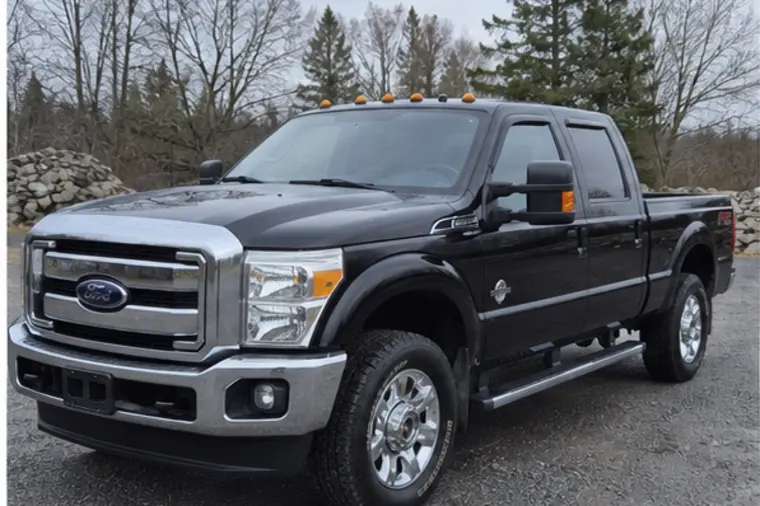
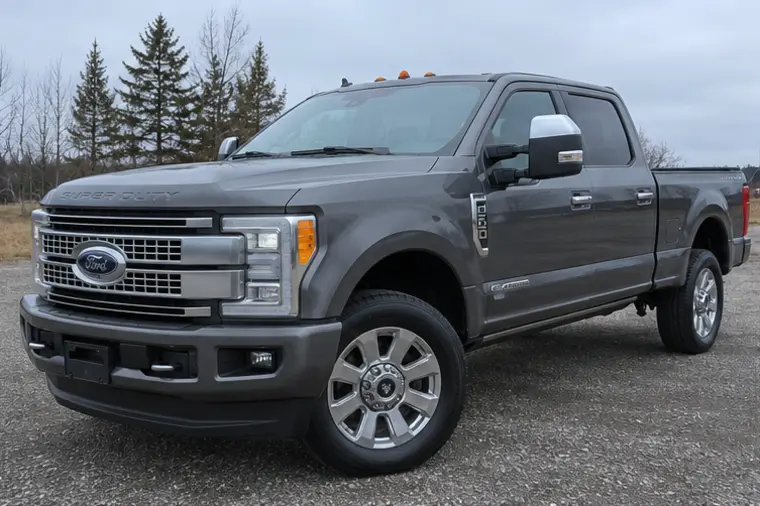
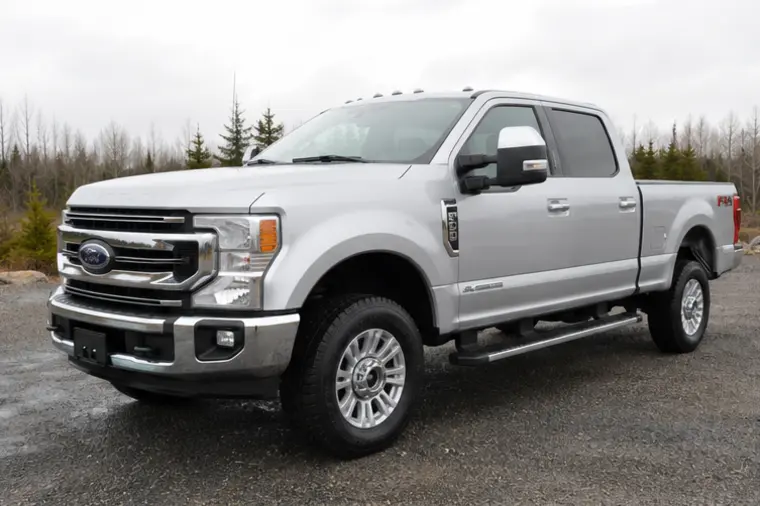
The reviewed primary evidence does not support blacklisting one 6.7L Power Stroke model year across every Super Duty pickup and chassis cab. It does support exact candidate rules. Specified 2020–2022 trucks require current fuel-pump campaign research; different equipment eras require their own manuals, parts and transmission evidence; and every candidate must pass identity, symptom, legal-configuration, load and support checks. Avoid an individual truck when a material question cannot be resolved to the safety, downtime and budget standard of the intended work.
Direct verdict: avoid unresolved trucks, not an entire year
Pause when VIN, truck class, engine version, transmission, emissions configuration or campaign history is uncertain. Decline when a safety-related condition is unresolved without an acceptable plan, a material symptom lacks diagnosis, major work has no coherent repair boundary, the truck is illegally configured or its ratings cannot support the job.
A documented campaign-year truck can be stronger than an out-of-range candidate with warnings, missing maintenance or unsupported tuning. Year selects the correct research; it does not settle the transaction.
Reconsider only when new evidence directly resolves the same pause reason and a relevant recheck passes. A discount or unrelated maintenance does not close it.
Verify exact Super Duty identity first
Record VIN, model year, F-250 through F-600 class, pickup or chassis cab, cab/body, wheelbase, drivetrain, rear-wheel arrangement, axle, engine/emissions labels, transmission, original market and calibration.
Ford documents a 2019 six-speed diesel combination and a third-generation 2020 diesel with a ten-speed. Its 2024 pickup guide also separates standard- and high-output versions. Do not infer any of these from a generic “6.7 diesel” advertisement.
If build information, labels, registration and seller claims conflict, stop until resolved. Identity controls manuals, campaigns, ratings, parts and diagnosis.
Use year boundaries without inventing a blacklist
The table routes evidence. It does not establish exposure-adjusted failure rates.
| Period or boundary | Primary evidence | Candidate decision |
|---|---|---|
| 2015–2016 turbo application | Ford distinguishes this replacement-kit application from pre-2015 hardware | Verify installed part, diagnosis and outcome; do not infer failure frequency |
| 2019 six-speed reference | Ford identifies the 6.7L/six-speed combination | Use as an equipment benchmark, not a reliability award |
| 2020 third-generation/ten-speed boundary | Ford identifies a changed diesel/transmission combination | Select exact documents and inspect both systems; do not reject a first year automatically |
| Defined 2020–2022 24S78 population | Ford filing describes risk and a PCM/TCM remedy | Check current Canadian VIN status, prior symptoms and present fuel-system condition |
| 2024 standard/high-output pickup versions | Ford lists different exact outputs | Verify installed version and workload; output does not prove reliability |
Scrutinize the defined 2020–2022 fuel-pump population
Ford's 24S78 / NHTSA 24V957 filing, updated 23 January 2026, defines specified 2020–2022 6.7L F-Super Duty vehicles, including F-250 through F-600. It describes aged biodiesel deposits contributing to pump wear, possible debris and loss of motive power.
Possible warnings include extended cranking, a check-engine light, noise and reduced power. Verify the actual Canadian VIN using current Ford and Government of Canada paths; do not transfer U.S. eligibility.
Pause a candidate when campaign status, warning history or repair scope is unclear. Do not reject every truck in the year range or treat the defined population as a failure percentage.
Separate software completion from existing mechanical condition
The updated filing describes PCM and TCM software intended to increase pump cooling and prevent deposit formation. It does not state that programming replaces already-damaged components or removes debris.
Obtain the dated work order and ask whether fuel symptoms existed before or after campaign completion. When contamination or damage was diagnosed, require a written scope of components inspected, replaced, cleaned and reused, plus validation.
An in-scope truck with completed programming still needs present-condition evidence. An out-of-scope truck with a fuel symptom still needs system diagnosis.
Reject active symptoms without measured diagnosis
For extended crank, stall, reduced power or pressure codes, capture supply/high-pressure data, filters, fuel quality, electrical tests and contamination evidence. Do not name the pump or injectors from symptom and year alone.
For overheating or coolant loss, require trends, visible-leak inspection, pressure tests, temperatures, fan operation and load. For low power, record air restriction, charge-air leakage, exhaust restriction, boost data, codes and smoke.
Pause when the seller refuses suitable inspection or clears evidence before diagnosis. Decline when unresolved consequence exceeds the planned safety, recovery or downtime tolerance.
Test true cold and fully warm operation
Arrange a true cold soak when practical. Record ambient temperature, block-heater use, batteries and charging, wait-to-start behaviour, cranking, smoke, warnings, codes and stabilization.
After full warm operation, evaluate restart, cooling, fluid trends, warnings, engine response and transmission behaviour. A warmed truck cannot answer winter behaviour, and one abnormal start cannot identify a cause without measurements.
If conditions prevent an important test, preserve the limitation. Do not mark it passed from a seller's edited video or a brief warm drive.
Reconstruct maintenance by time, distance, hours and duty
Use the exact-year Ford manual and diesel schedule. Record oil/filter, fuel filtration, coolant and supporting transmission, transfer-case, axle and aftertreatment service by date, kilometres, engine/PTO hours, product and duty.
Towing, idle/PTO, dust, winter use, short cycles and storage can make odometer-only records misleading. Fresh baseline service cannot recreate missing history.
Keep unsupported past maintenance as unknown. Decline only when that uncertainty and its potential consequence exceed the ownership plan, rather than converting missing paperwork into proof of failure.
Treat DPF, DEF and tuning evidence as purchase-critical
Record exact messages and codes, soot and ash information, pressure/temperature sensors, regeneration history and duty. Short trips and idling are context, not automatic causes.
Regeneration may address soot but does not remove ash or prove upstream fuel, air, sensor, dosing or engine causes are resolved. A cleared message is not a repair result.
Confirm legal original-equipment emissions hardware and calibration. Decline deleted or unknown configurations when legality, insurance, diagnosis or service acceptance cannot be established.
Read turbo and major-engine work narrowly
For turbo, replacement-engine, short-block or rebuild claims, obtain complaint, tests, findings, assembly/part identity, parts, reused systems, calibration, installer, warranty and outcome.
A new engine does not renew the fuel, cooling, emissions, transmission, driveline, electrical, chassis or body. A new turbo does not certify upstream and downstream systems that were not tested.
Pause when the record stops at a parts list. Reconsider only when measured cause, complete repair boundary and condition-matched result align.
Audit repeated visits and intermittent complaints
Place warning dates, codes, operating conditions, tests, parts, programming and outcomes on one timeline. Multiple visits may reflect one unresolved complaint, staged work, an intermittent connection or different concerns.
Do not count visits as independent failures without evidence, but do not ignore recurrence. Compare whether the same condition returned under the same temperature, load and duty.
Classify repaired and rechecked, unresolved and not-assessed items separately. An invoice total cannot substitute for that chronology.
Inspect modifications and chassis-cab integration
List tuners, calibrations, fuel/air/turbo/exhaust changes and transmission programming. On chassis cabs inspect PTO equipment, hydraulics, body wiring, grounds, mounting, driveline angles, weight distribution, cooling airflow and service access.
“Stock,” “returned to stock” and “built” are seller reports until hardware, software and records align. Confirm provincial/federal legality, insurer acceptance and shop support.
Decline when undocumented changes block reliable diagnosis, create an illegal configuration or make support impractical. Keep body and transmission faults separate from internal-engine conclusions.
Verify payload, towing and whole-truck condition
Calculate occupants, cargo, body, accessories, hitch equipment and loaded tongue or pin weight using certification/door labels, axle/tire and hitch limits and exact Ford configuration literature.
Inspect transmission, transfer case, axles, steering, brakes, tires, wheels, frame, mounts, hitch, electrical system, body and corrosion. Engine output cannot create missing capacity or repair unsafe structure.
Reject a mismatched truck regardless of engine reputation. Keep system findings separate so one good component cannot conceal a material condition elsewhere.
Confirm Canadian support before committing
Use Ford Canada's service-location search as a starting point, then confirm that the facility accepts the exact model year, truck class, engine version, body and modifications.
A directory entry does not certify diesel expertise, parts, appointment timing or body access. Include transport, diagnosis, disassembly, parts delay, programming, validation and substitute capacity.
For commercial or remote work, a repairable candidate may still be unsuitable when support and downtime consequences exceed the plan.
Apply pause, decline and reconsider rules
Do not average unlike findings into a score. Preserve the exact evidence that changes the classification.
| Decision | Evidence standard |
|---|---|
| Continue evaluating | Identity aligned; campaign path checked; no material unresolved symptom; legal configuration; plausible load and support fit |
| Pause | VIN/application conflict, open campaign question, warning, incomplete repair boundary, missing load evidence or uncertain support |
| Decline | Unsafe, overloaded, illegally configured, diagnosis refused or unresolved consequence outside requirements |
| Reconsider | New evidence resolves the same pause reason and a relevant recheck passes |
Keep a candidate-specific acquisition file
Save advertisement, VIN and labels, exact manuals, campaign results, maintenance, scans, inspection, repair chronology, modifications, load documents, estimates and limitations.
Separate purchase price, immediate safety work, scheduled maintenance, diagnosed repair, unresolved investigation and optional upgrades. Use current local written scopes rather than generic online prices.
The decision applies to one truck at one time. It is not a year blacklist, failure-rate study, warranty or remaining-life promise.
Retain the lookup and inspection dates so later evidence can update the decision without erasing what was unknown at purchase time.
6.7L Power Stroke years-to-avoid questions
Which 6.7L Power Stroke year should everyone avoid? No reviewed primary source supports one universal blacklist.
Should every 2020–2022 truck be rejected? No. Verify exact application, current Canadian VIN status, work performed and present fuel-system condition.
Does completed software make the fuel system reliable? It closes a defined action; it does not repair or certify every mechanical component.
Is a first-year powertrain automatically risky? A revision boundary selects different evidence, not a failure probability.
What is the clearest reason to walk away? A material unresolved identity, safety, symptom, legality, load or support condition outside the buyer's requirements.
Evidence note: manufacturer documents establish the specific facts and applications cited. Buying workflows and cost scenarios are DieselTrucks.ca editorial guidance. These pages do not publish measured failure rates or confirm the condition, recall status or capacity of a particular truck.
General educational content for Canadian diesel-pickup research. Verify the exact truck, model year, certification labels, owner manual and manufacturer documentation, and obtain qualified mechanical or towing advice where appropriate.
Sources & Further Verification
Use the exact model year, VIN, truck labels and current manufacturer documentation when moving from general research to a purchase or towing decision.
- Ford 2019 Super Duty brochure — original Ford publication, archived by Zigwheels
- Ford 2020 Super Duty Packaging Guide — original Ford publication, dealer-hosted copy
- Ford 2024 Super Duty pickup towing guide — original configuration tables and footnotes
- Ford 2015–2016 6.7L diesel turbo replacement kit — limited design comparison, not reliability data
- Ford 24S78 / 24V957 — manufacturer filing updated 23 January 2026, defined 6.7L populations
- Ford Canada — current VIN recall lookup
- Government of Canada — current recalls, advisories and safety-alert search
- Ford 2020 Super Duty owner manual — Canadian/U.S. vehicle and diesel maintenance sections
- Ford Canada — current owner-manual access by vehicle and model year
- Ford Canada — dealer and service-location search
- Ford owner manuals